Abstract
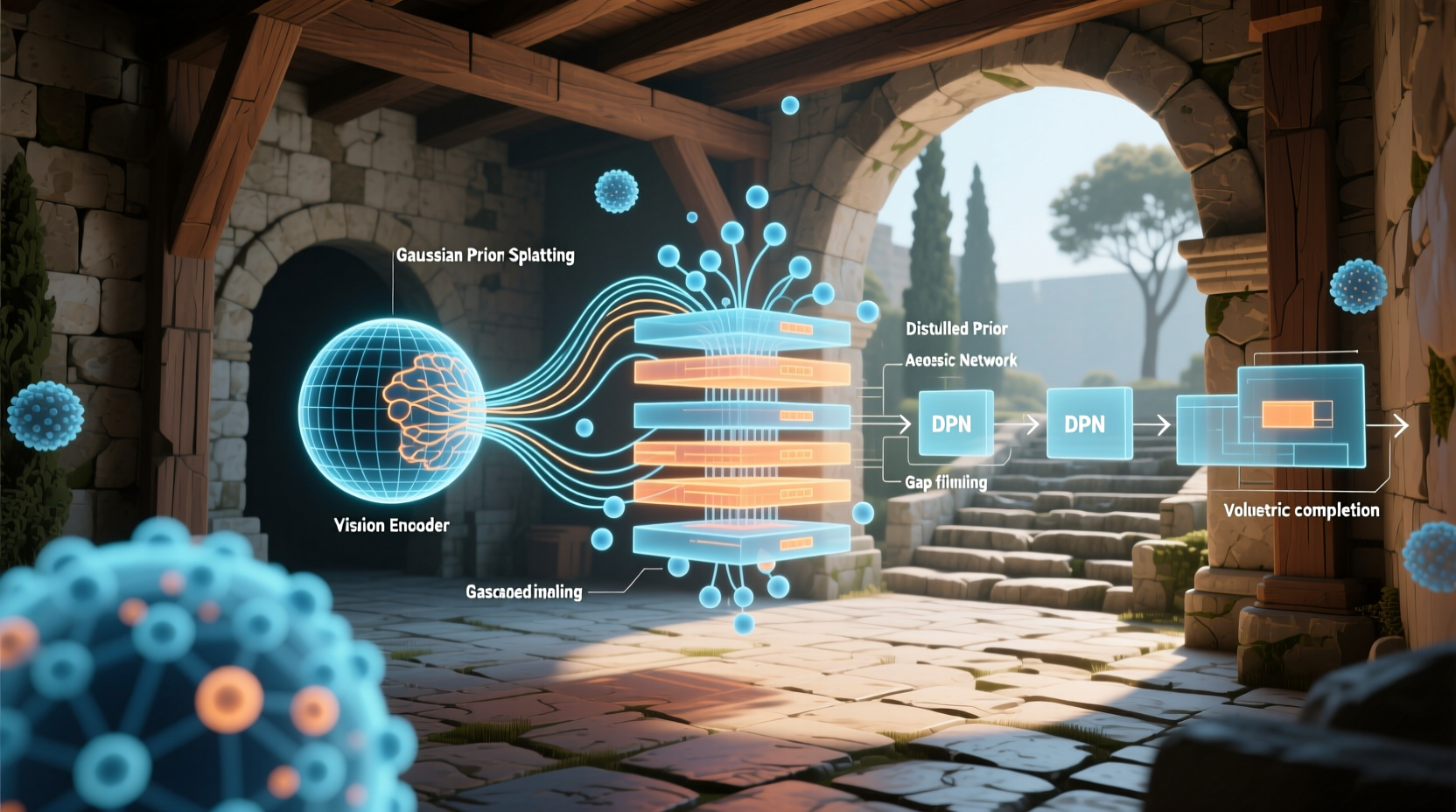
Watch Our Video
Our Product
Best in class
Meetup WIth Insofy Founder
Meetup WIth Insofy Founder
Key Contributions
Technical innovations enabling single-view 3D reconstruction
Feedforward 3DGS Generation
First method to generate complete 3D Gaussian Splats from single panoramas without per-scene optimization
Distilled Prior Network
Novel architecture distilling geometric priors from 500K scenes into a compact latent representation
Cascaded Refinement
Multi-stage pipeline: gap filling, density upsampling, and volumetric completion
Method Overview
Pipeline Architecture
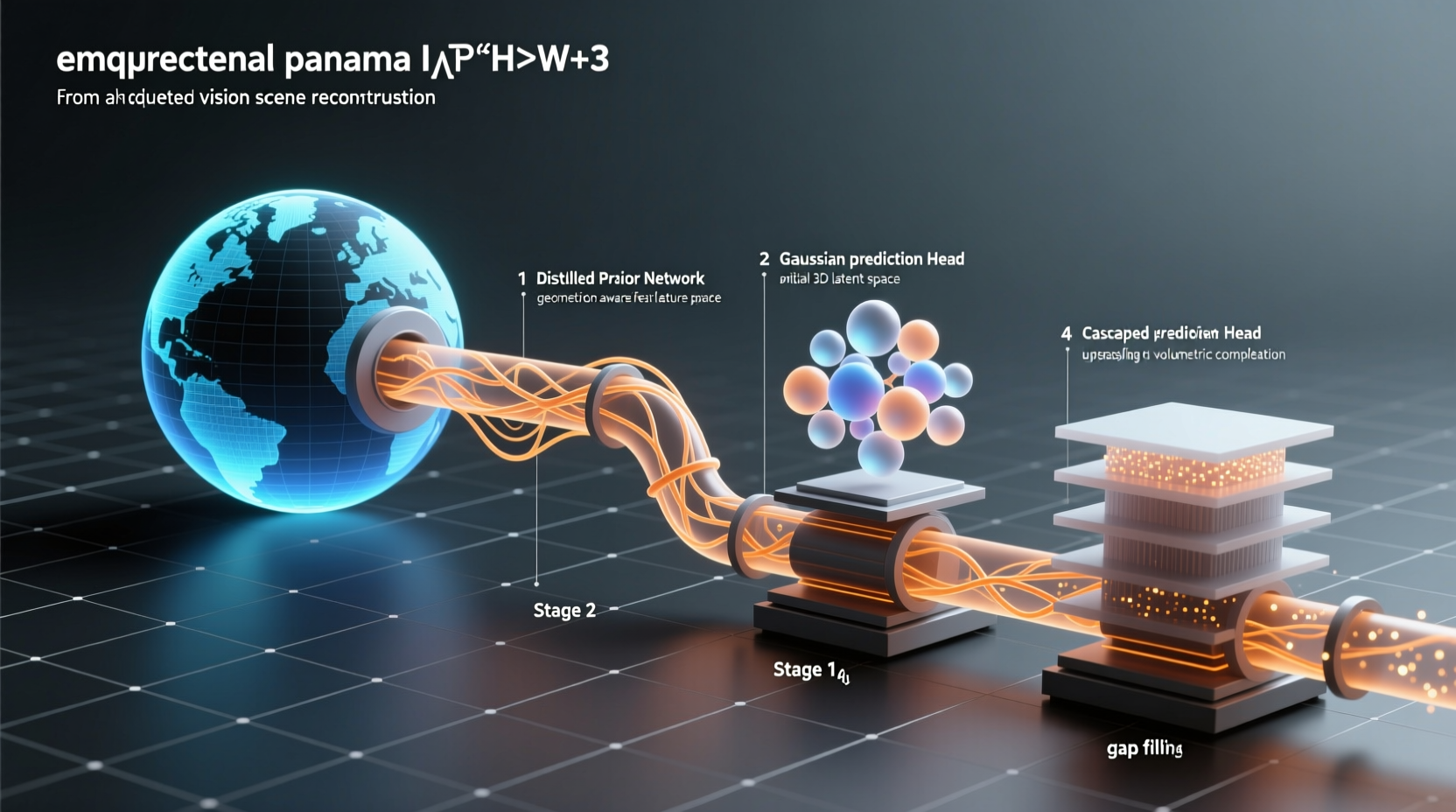
Spherical Vision Encoder
Geodesic Attention for Panoramic Understanding

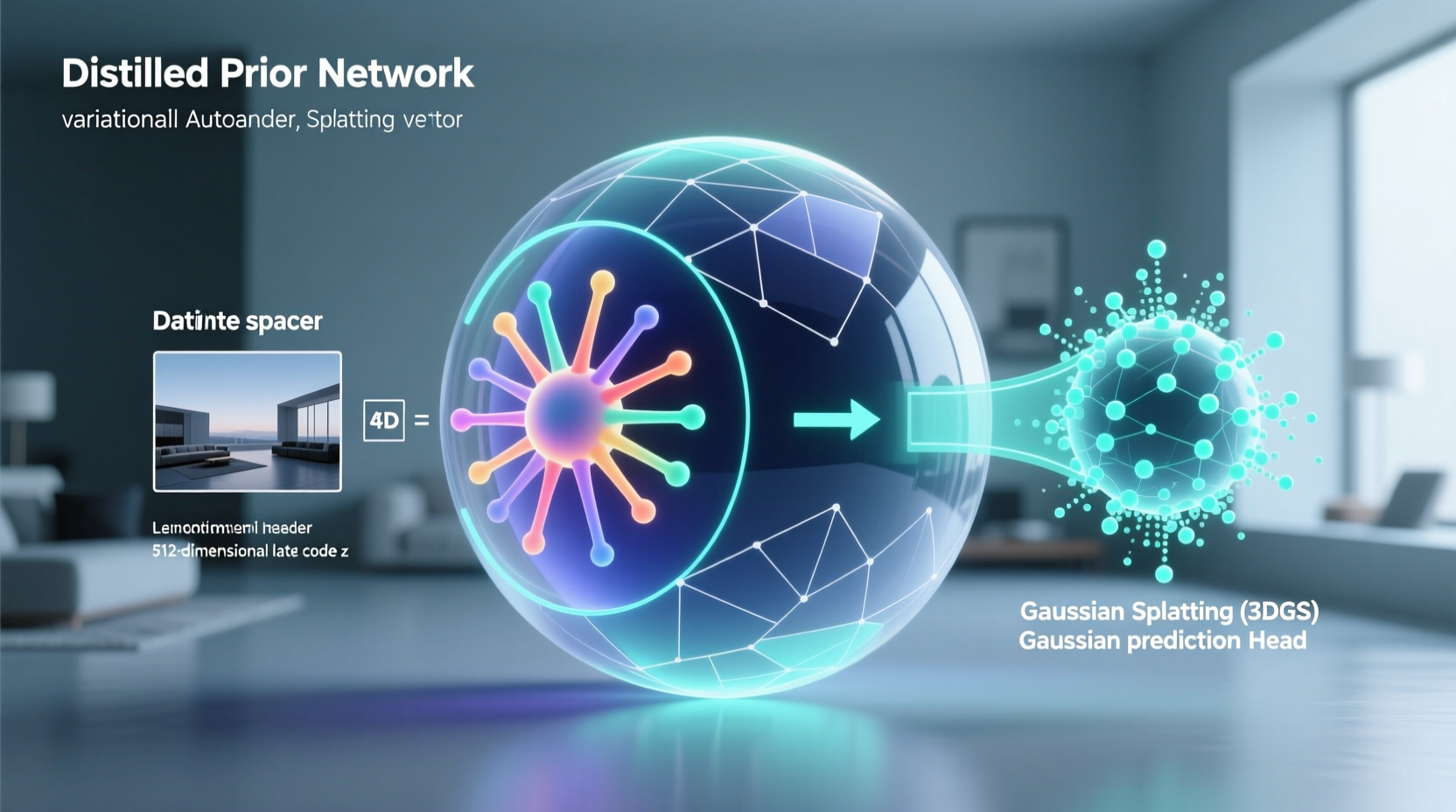
Distilled Prior Network
Learning Geometric Priors from Large-Scale Data
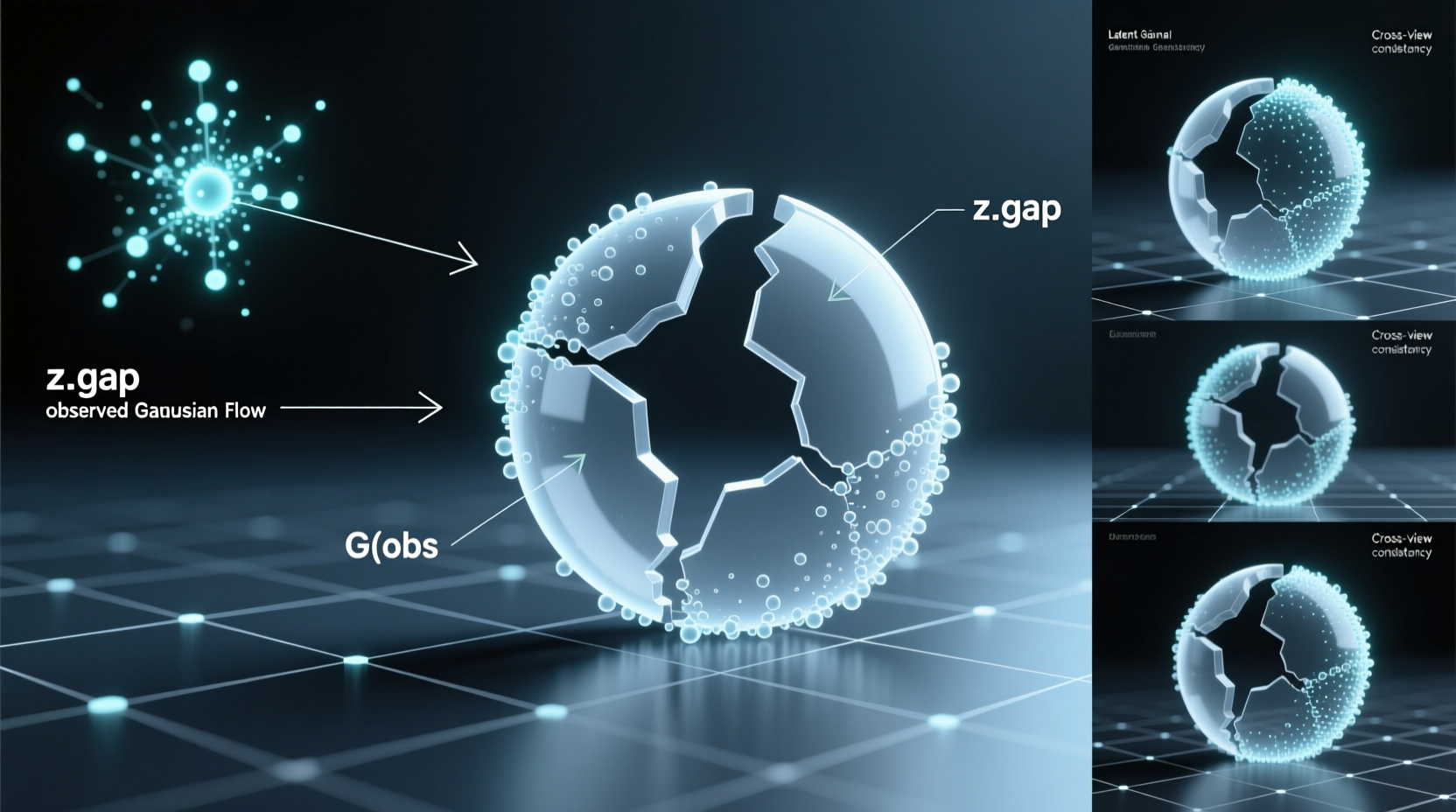
Gap Filling Module
Diffusion-Based Occlusion Completion
Density Upsampling
Learned Point Cloud Refinement

Volumetric Completion
Triplane Autoregressive Generation

Quantitative Results
Evaluation on Matterport3D benchmark (higher is better for PSNR/SSIM, lower for Chamfer/Time)
Matterport3D test set
Novel view synthesis
Structural similarity
RTX 4090
Comparison with Prior Work
Pano2GS outperforms existing single-view and optimization-based methods
vs. 3DGS (per-scene)
50× faster inference, comparable quality without multi-view input
vs. PixelNeRF
+3.2 dB PSNR, explicit 3DGS output enables real-time rendering
vs. MonoNeRF
+2.8 dB PSNR, handles full 360° scenes vs. limited FoV
vs. ZeroNVS
3DGS output vs. NeRF, 5× faster inference
Pano3D-500K Dataset
Large-Scale Training Data Release
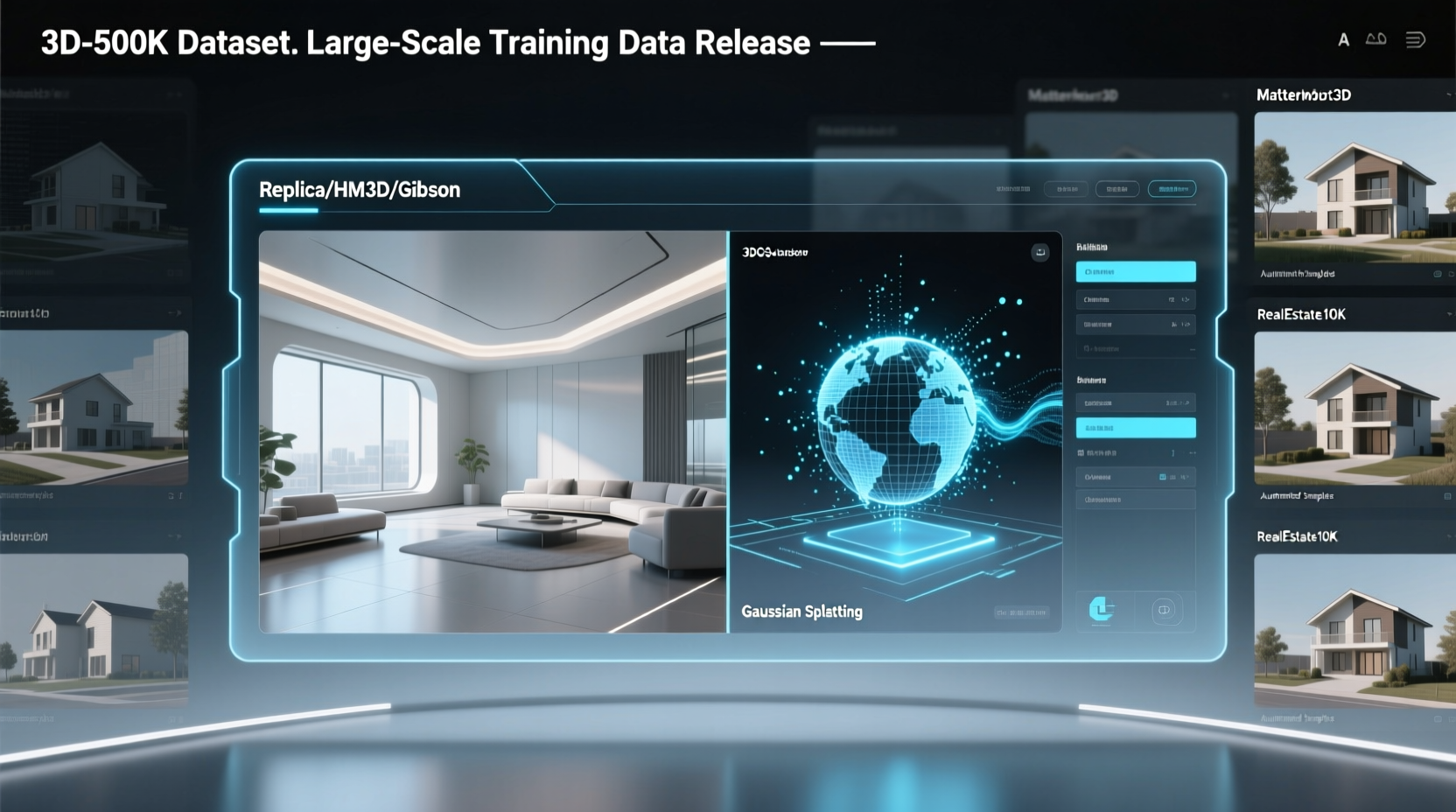
Open Source Release
All components released under Apache 2.0 license
Training Code
PyTorch Lightning training scripts with Hydra configuration
Pretrained Weights
Base (500M), Large (1.2B), and XL (3B) model checkpoints
Inference Pipeline
CLI and Python API for single-image inference
Gradio Demo
Interactive web demo on HuggingFace Spaces
Pano3D-500K
Full training dataset on HuggingFace Datasets
Evaluation Suite
Benchmarking scripts for reproducible comparison
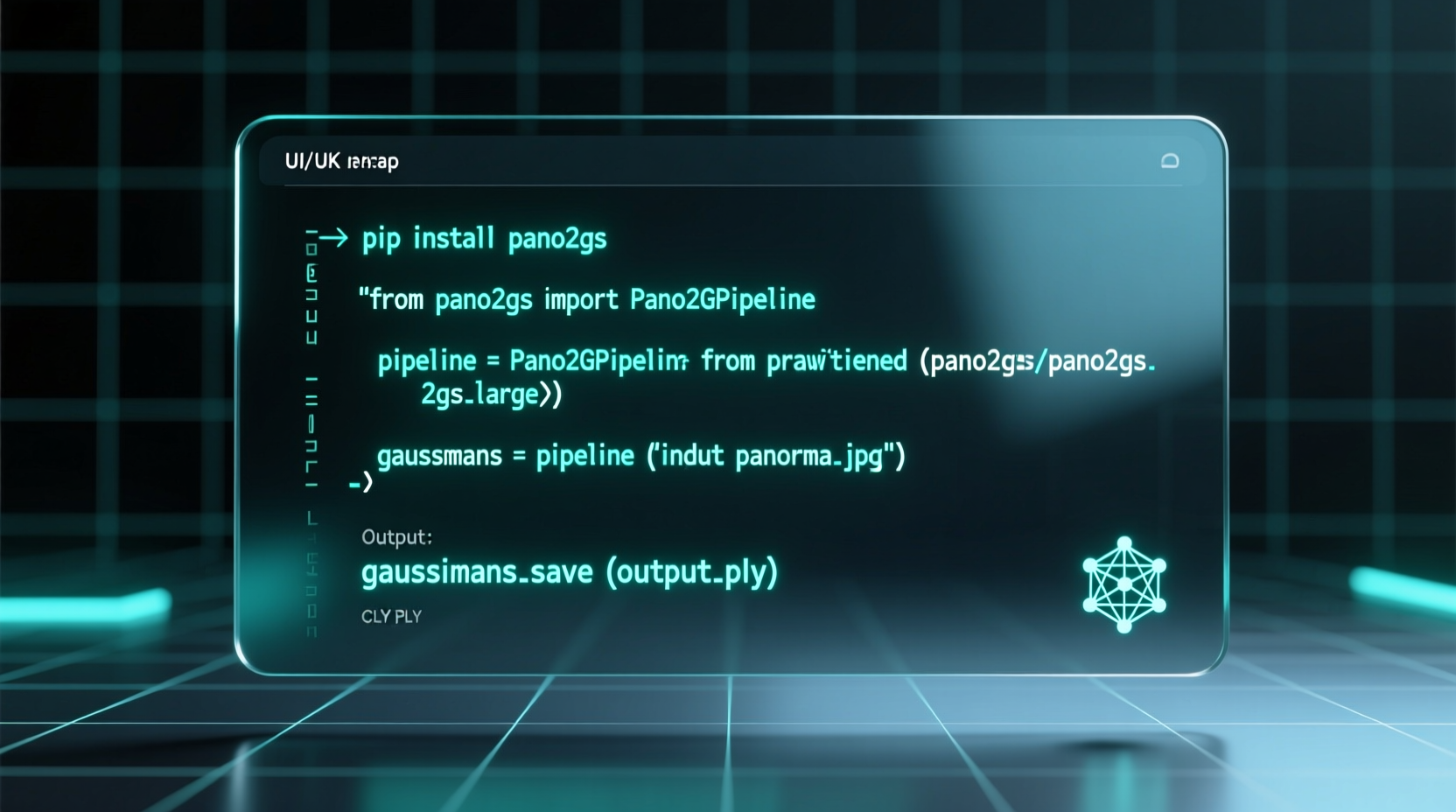
Quick Start
Install and run in 4 lines of code
from pano2gs import Pano2GSPipeline
pipeline = Pano2GSPipeline.from_pretrained('pano2gs/pano2gs-large')
gaussians = pipeline('input_panorama.jpg')
gaussians.save('output.ply')
Model Variants
Choose the right tradeoff for your application
Pano2GS-Base
500M params | 12.1 sec | 23.9 dB PSNR
Pano2GS-Large
1.2B params | 14.2 sec | 24.7 dB PSNR
Pano2GS-XL
3B params | 18.5 sec | 25.3 dB PSNR
Pano2GS-Fast
200M params | 3.8 sec | 22.1 dB PSNR
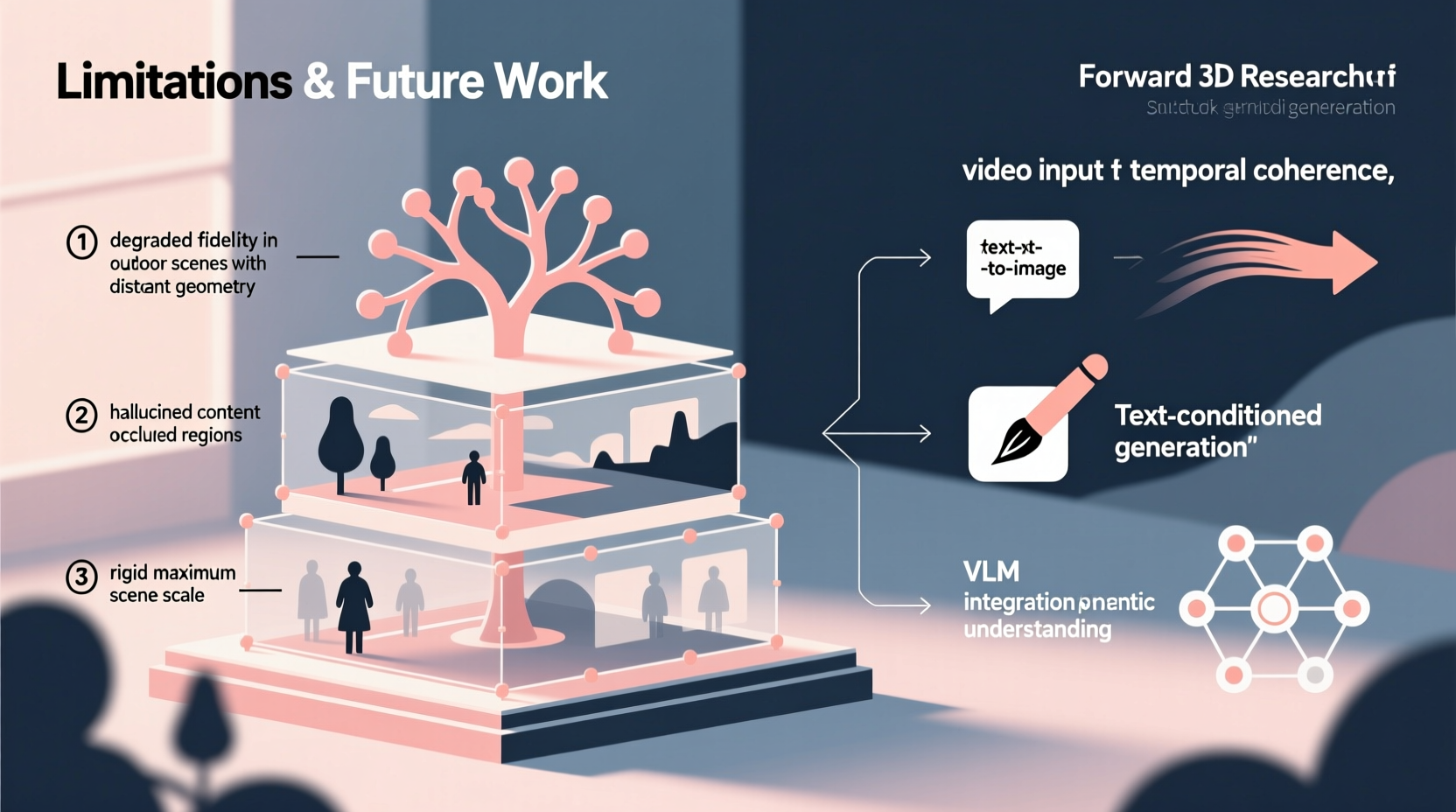
Limitations & Future Work
Honest assessment and research directions
Citation
If you find our work useful, please cite:
title={Pano2GS: Single-View Panoramic 3D Gaussian Splatting with Learned Geometric Priors},
author={Author, First and Author, Second and Author, Third},
booktitle={Proceedings of the IEEE/CVF Conference on Computer Vision and Pattern Recognition (CVPR)},
year={2027}
}

Related Work
We build upon these foundational works
3D Gaussian Splatting
Kerbl et al., SIGGRAPH 2023
PixelNeRF
Yu et al., CVPR 2021
ZeroNVS
Sargent et al., CVPR 2024
DUSt3R
Wang et al., CVPR 2024
Acknowledgments
Frequently Asked Questions
Common questions about using Pano2GS
Contact
Questions about the paper or collaboration inquiries